When in Rome…

On 8 December 2001, a Washington Post article asked a woman stationed in Saudi Arabia if she was comfortable with some of that country’s rules, to which she replied that she was and ‘When in Rome, do as the Romans do’. But the article writing queried, ‘But how far does that go? To feeding the lions?’
Overlooking arguments about damnatio ad bestias, this notion/idiom of ‘When in Rome, do as the Romans do’ has a long history, possibly stemming from a story of Augustine and his mother Monica. They discovered that Saturday was observed as a fast day in the city of Rome, despite it not being so in Milan where they lived. Worried about causing offence or diverging from what they considered standard religious practice, according to a later letter of Augustine to his friend Casulanus, they consulted Ambrose, bishop of Milan.
“When my mother was with me in that city, I, as being only a catechumen, felt no concern about these questions; but it was to her a question causing anxiety, whether she ought, after the custom of our own town, to fast on the Saturday, or, after the custom of the Church of Milan, not to fast. To deliver her from perplexity, I put the question to the man of God whom I have just named. He answered, What else can I recommend to others than what I do myself? When I thought that by this he intended simply to prescribe to us that we should take food on Saturdays — for I knew this to be his own practice — he, following me, added these words: When I am here I do not fast on Saturday; but when I am at Rome I do: whatever church you may come to, conform to its custom, if you would avoid either receiving or giving offense. This reply I reported to my mother, and it satisfied her, so that she scrupled not to comply with it; and I have myself followed the same rule.”
Augustine, Ep. 36.32

It could be argued that Ambrose’s response was somewhat unhelpful if Monica’s query was truly about correct fasting practice as he does not say what was actually ‘correct’ – would he really state he is correct over authorities in Rome? However, his reply that is thought to have spawned the idiom ‘When in Rome, do as the Romans do’.
The modern version may lean more towards becoming accustomed to local practice for your own enjoyment or broadening of your cultural horizons, without losing sight of the idea of fitting in. Ambrose’s original meaning seems much more about observing local custom for your own good, particularly as it was religious practice based.
That even a prominent churchman like Ambrose of Milan would alter his religious practice rather than confront the notion that the city of Rome and likely the pope observed a religious fast on an untraditional day to that of Milan could suggest that there was some ecclesiastical diplomacy and even a hint of pragmatic warning in his advice to Monica and Augustine.
And when the medieval version of the idiom became “When in Rome, do as the pope does”, we might consider that this made any warning about following Roman religious custom more overt. Certainly, doing as the pope did was a bit more specific than doing what the Romans did, which may reflect on the expansion of power and influence the bishops of Rome had enjoyed in the centuries since the time of Augustine.
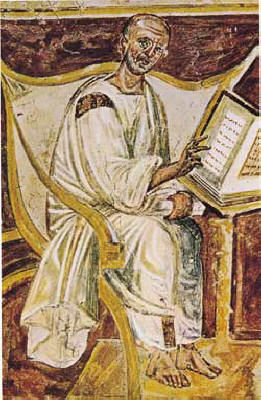
That said, in the same letter to Casulanus, Augustine may give advice that may essentially mean ‘default to the pope’. During his time in Africa, Augustine was confronted with various church doctrines – Donatists, Pelagianism etc. – that deviated in custom from orthodox Christianity.
His advice in this circumstance was to “adopt in each congregation the custom of those to whom authority in its government has been committed” (Augustine, Ep. 36.32), which could be a slightly round about way of saying ‘follow the church of the Roman state’. Augustine then makes the assumption that an individual’s local bishop was the representative of that church of the Roman state by saying “do not in this resist your own bishop, but follow his practice without scruple or debate” (Augustine, Ep. 36.32).
Surely Augustine did not recognise Donatist or Pelagian bishops, which may have been seen in many African towns, as actual bishops, for if he did, Augustine would be telling orthodox Christians to listen to men he and the Roman Church considered heretics.


Comments