Before Pyrrhus: The Italian Campaign of Alexander the Not-So-Great
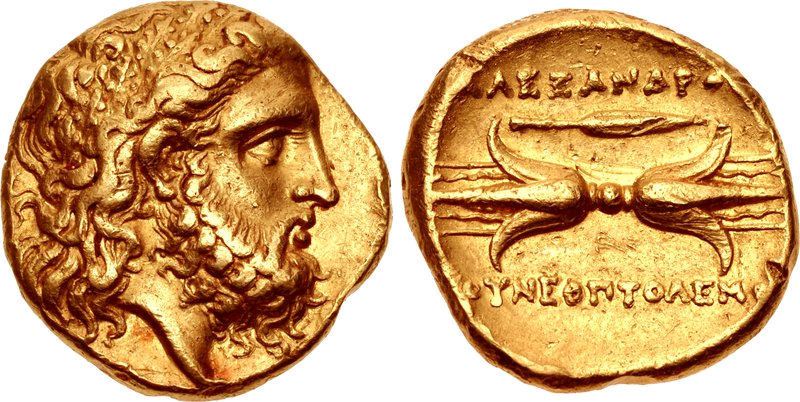
While Alexander the Great was crossing the Hellespont on his way to immortality, in 334BC, his uncle and brother-in-law, Alexander I of Epirus, received an invite to cross to Italy from Taras, a Greek colony in Magna Graecia, to help them against several harassing Italic tribes, including the Lucanians, Brutti and Messapians. It was not unusual for the Italian Greeks to ask for help from Greece; for example, as recently as 338BC, Archidamus III of Sparta had campaigned around Taras in the ‘heel’ of Italy. And in a case of epic foreshadowing (and spoilers), Archidamus was killed in that year fighting under the walls of the Messapian city of Manduria in Apulia...
Even with this recent Spartan failure in Italy, Alexander agreed to intervene on behalf of Taras. Why would he do so? Did he feel that conquering the west was his sphere while his nephew/brother-in-law went east (cf. Justin, Epit. XII.2)? The Epirote kingdom and its immediate neighbours seem to have been faced with piracy in the Adriatic Sea, with some ports in southern Italy being used as pirate bases. Dealing with these bases may have been part of the motive for Alexander’s crossing to Italy, with him possibly targeting these bases and looking to bring enough order to Adriatic Magna Graecia to prevent pirates from thriving in its territory.
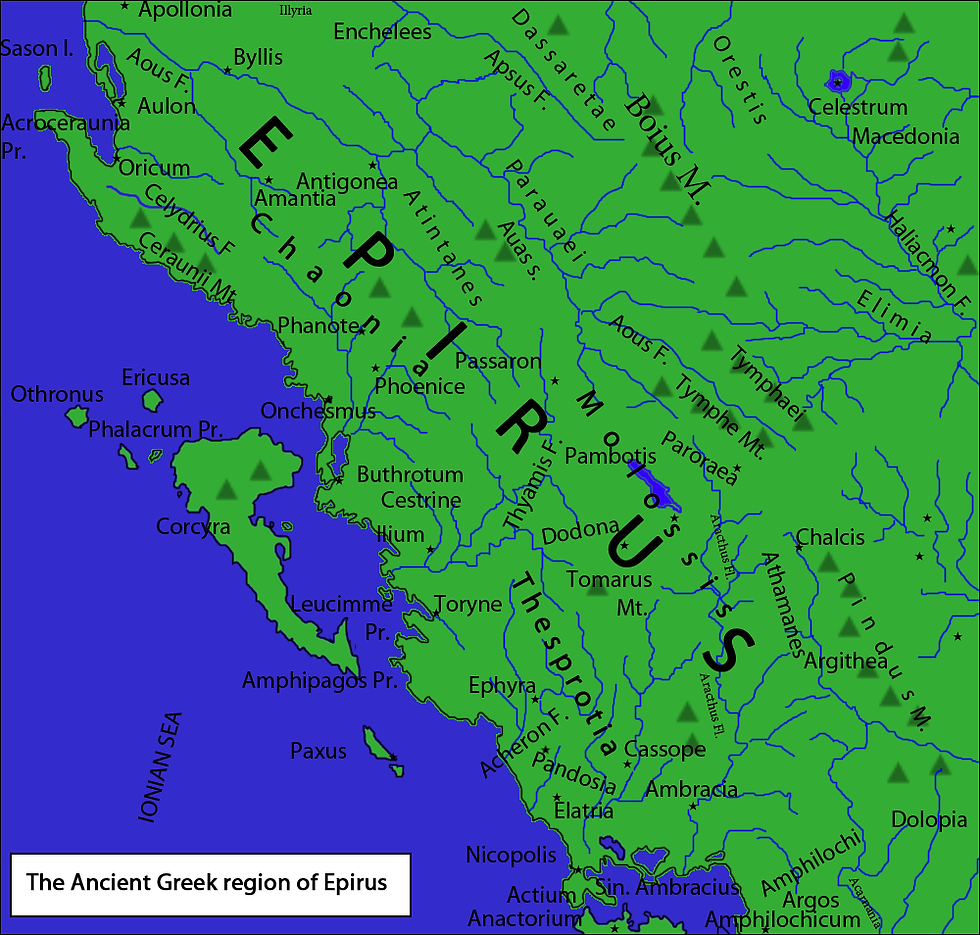
However, the most prevalent reason given by the sources on why Alexander undertook this Italian campaign focuses on an oracle. The Oracle of Zeus at Dodona (Justin, Epit. XII.2) told Alexander that he would be killed near the Acheron river and a city called Pandosia; as there were a river and city of these names in Epirus, Alexander may have been moving to Italy to escape this prophesied fate, but, as always with such oracles, “in seeking to escape his doom he ran full upon it” (Livy VIII.24.4).
Upon arriving in southern Italy with his army and likely reinforced by Tarentines, Alexander first squared up to the Apulians but after finding out about the Aetolian origins of their capital at Brundisium, Alexander made an alliance with them instead. That alliance may have included the Achaean colony at Metapontum, although it could be that that city was forcibly conquered from Messapians.
The Epirotes and any allies then won several victories over the Brutti and Lucanians, capturing several cities, sending 300 families to Epirus as hostages. The exact order of events it not completely clear, but the names of those cities show that Alexander initially focused on the environs and interests of Taras and the Adriatic coast. He lifted Heraclea from the Lucanians, a Tarentine colony in Lucania but along the coast of the Gulf of Taranto from Taras, and captured Sipontum from pirates on the ‘spur of the boot’ of Italy along the Adriatic Coast, as well as other Messapian towns.
The Epirote king then spread his wings a bit further. He moved into the Bruttian ‘toe’ of Italy, capturing Terina and Consentia from the Brutti, as well as having dealings with Thurii. He struck as far north-west as the former Sybarite colony at Poseidonia on the Tyrrhenian coast, by then held by Lucanians and later to be called Paestum by the Romans. This north-western advance attracted the attention of the Samnites, then embroiled in the drift towards what would be the Second Samnite War with Rome (326-304BC). The Samnites may not have acted against Roman intervention in Campania due to the presence of Alexander.
And as the Epirote army departed Paestum, the Samnites and Lucanians looked to attack it. Why might the Samnites have thought to do so? They could well have had an alliance with some of the local Lucanians and so thought to support them against the Epirote invader. Could it even be that they had an inkling of where Alexander was heading upon departing Paestum? The king’s destination is unclear but Livy VIII.17.9 could be read that Alexander was heading ‘up’ or ‘north’ from Paestum which would be towards Samnite territory or even the Romano-Samnite battleground of Campania. The Epirotes allying with Roman against the Italic tribes could have been a disaster.
Whatever their reason for attacking Alexander somewhere near Paestum, the Samnites and Lucanians were defeated. And this victory led to what the Samnites did not want - a treaty between Alexander and the Romans (Livy VIII.17.9-10; Justin, Epit. XII.2); however, the fact that there were powers in south central Italy willing to fight him may have convinced Alexander to keep his attention on southern Italy... but only for now. Livy considers it unlikely that Alexander would have kept to the terms of his treaty with the Romans had he continued to be successful against the Lucanians and Bruttians (Livy VIII.17.10). It does seem a strong possibility that if there had been a prolonged Epirote presence in southern Italy, it would surely have allowed itself to be dragged into the Second Samnite War, likely on the side of whomever was losing at the given time. “Fortune held him back from attacking the Romans” (Livy VIII.24.18).
Another reason for Alexander turning his attention away from any interest in Romano-Samnite affairs may well be that despite his victories, the Brutti and Lucanians had not yet been subdued. “Having collected reinforcements from their neighbours, [they] renewed the war with fresh vigour” (Justin, Epit. XII.2). Alexander had taken up a position not far from the Italian city of Pandosia on the frontier of Lucania and Bruttium and was preparing to strike into enemy territory once more. On the surface, the Epirote king seemed to be in control of the situation, possibly on the way to taking a large section of Magna Graecia under his hegemony; however, it all fell apart very quickly.
There was already some fracturing in the alliance between Alexander and Taras, seen with Alexander’s attempted transfer of a Panhellenic festival from Heraclea to Thurii (Strabo VI.3.4). Might Alexander have been too successful in his initial campaigning for the liking of the Tarentines and their local allies? The expansion of his campaigning well beyond the Apulian ‘heel’ of Italy might have spread worry of an Epirote hegemony across southern Italy. Was Alexander beginning to act for himself and Epirus rather than Taras and other Italian Greeks, maybe starting to intimate that some of the cities he had ‘liberated’, particularly the likes of Heraclea and Metapontum were actually to be his? It is possible that Metapontum had been garrisoned with Epirote soldiers, perhaps giving some credence to any such concerns of Taras. Any such crumbling of the Epirote-Tarentine alliance would also have discouraged Alexander from pressing further north.
In the renewal of fighting, Alexander’s first mistake was dividing his army into three and situating it on three separate hills. Initially, there was not necessarily a problem as the hills were close enough for each division to provide help to the other; however, poor weather saw each division cut off from the others, essentially making them three, weaker sitting ducks. And the Brutti and Lucanians were quick to take advantage of this, overrunning and annihilating the two likely smaller camps not under the direct command of the Epirote king. These tribal armies then united to surround Alexander’s camp.
It was perhaps here that a second mistake by Alexander revealed itself. He had a group of 200 Lucanian exiles with him, trusting their loyalty when he shouldn’t have. These exiles contacted the besiegers, requesting and surely receiving restoration in return for betraying Alexander. Perhaps finding his defences undermined by the presence of traitors, Alexander “made a daring escape” (Livy VIII.24.9) with a select band. It could be that rather than purely aiming at escape, Alexander might have been attempting the desperate gambit of targeting the Lucanian commander, hoping that killing him might see the Lucanian army withdraw; however, if this was the case, it did not work for while the unnamed Lucanian leader was killed, the battle continued with the Lucanians still playing a significant role.
Having broken through the tribal siege lines, Alexander looked to gather the remnant of his army at a broken bridge over a river. When his forces began treacherous fording of the river, one Alexander’s soldiers, surely an Italic ally, made it known that the river was called the Acherus… remembering the pronouncement of the Oracle of Dodona about Pandosia and Acherus, Alexander hesitated.
This allowed a band of Lucanians to catch up to the Epirotes and when Alexander saw them, he led his horse into the river. But the brief hesitation had done its job. As having only made it to the shallows, the Epirote king was suddenly in range of Lucanian missiles. Impaled by a javelin thrown by one of the traitorous Lucanian exiles, Alexander I of Epirus fell into the river, bleeding out or drowning. His body was carried downstream where it was claimed by the enemy. There, it was mutilated, cut in two “through the middle” (Livy VIII.24.14), with one half kept for sport and the other half sent to Consentia.
The mutilation of the royal corpse in camp was only stopped by the reminder from a woman that there were prisoners held by the Epirotes that could be exchanged for Alexander’s remains. This exchange took place and the royal remains were cremated and sent to Metapontum and then back to Epirus to Alexander’s wife Cleopatra and his sister Olympias, the sister and mother of Alexander the Great respectively. An alternative is that the people of Thurii ransomed Alexander’s body and buried it (Justin, Epit. XII.2). Any remaining Epirote presence in southern Italy would likely have left with their king’s remains or shortly afterward.
Livy dates the Battle of Pandosia to the consulship of Gaius Poetelius Libo Visolus and Lucius Papirius Carbo - July 323 to June 322 BC, but this must be be a mistake, with Livy or his source mixing up the Alexanders - Libo and Carbo will have been consuls at the time of Alexander the Great’s death. Livy’s other dating of the battle places it around the time of the founding of Alexandria in Egypt, which seems to have been in early 331BC - the Roman consuls would therefore have been Galus Valerius Potitus and Marcus Claudius Marcellus.
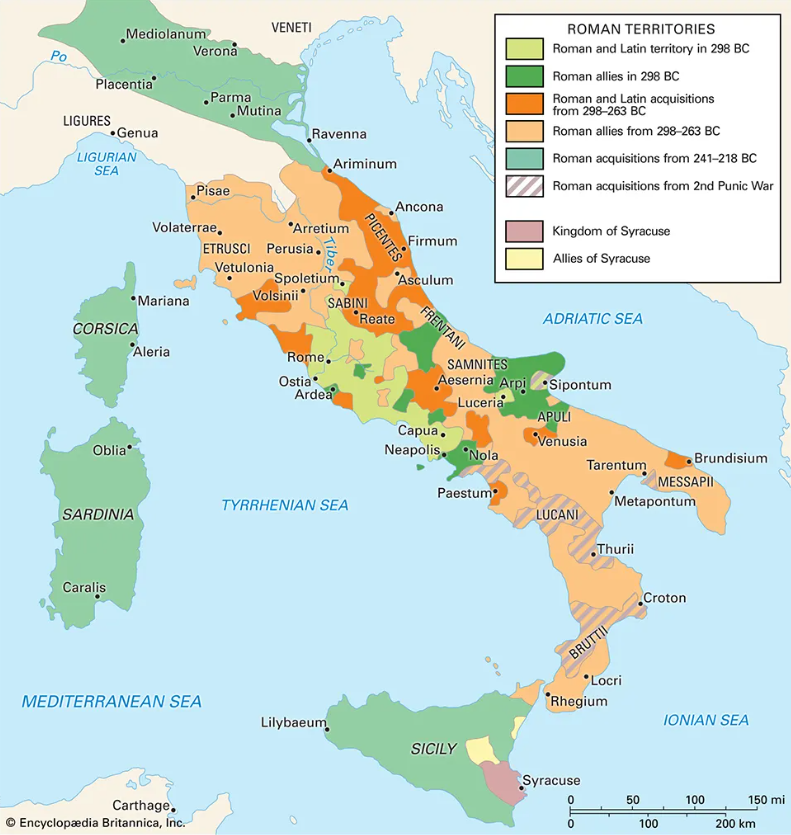
Speaking of Alexander the Great, he heard of his uncle’s death whilst in Parthia and was greatly aggrieved, ordering three days of mourning in his army (Justin, Epitome XII.3) - could the death of Alexander of Epirus have been a spur for Alexander the Great to invade Italy seeking revenge on the Lucanians? Some ancient sources like Quintus Curtius Rufus thought Alexander the Great had a western expedition planned, while Livy speculates on how such an endeavour would have gone, claiming that the Romans would have resisted Alexander the same way they had done with Pyrrhus, a victory perhaps aided by learning some of the lessons demonstrated by the Samnite-led coalition’s defeat of Alexander of Epirus. However, the Romans may not have learned those lessons until the Second Samnite War, a conflict that would surely have gone very differently had Alexander the Great landed on Italian shores…
Alternatively, had Alexander been victorious at Pandosia, given Livy’s doubts that the Epirote-Roman treaty would have held, Rome may have faced an Epirote invasion some 50 years before she actually did when Pyrrhus came knocking in 281BC. In either of these scenarios of an Alexandrian invasion of central Italy, would the Republican army of c.330BC have been in any position to fight off an Epirote or Macedonian army? Livy was certainly confident that Rome of c.320BC could have dealt with Alexander the Great, so why not his much less talented uncle? Personally, I very much have my doubts on the former as there should be no downplaying the impact of the Samnite wars on the abilities of the Roman army. Without that crucible to mould and galvanise the legion, would the Roman army really have been able to stand up to the Macedonian phalanx and companion cavalry of the Macedonian king...? I highly doubt it. It may well be that the circumstances before and during the Battle of Pandosia worked out perfectly for the Romans – Fortune really was on their side in their dealings with Alexander of Epirus (cf. Livy VIII.24.18).


Comments